
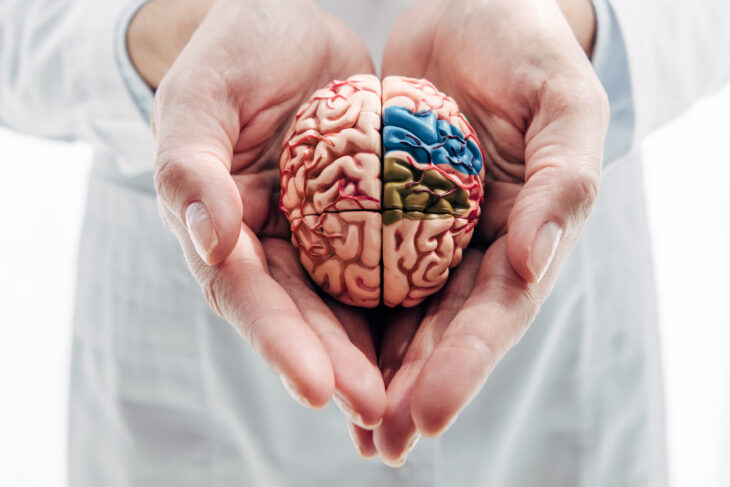
The Science of Hope: How the Brain Supports Recovery
According to the National Institute of Mental Health, more than one in five U.S. adults live with a mental illness. Of the 23.1% of the population affected, only 50.6% received mental health treatment in the past year. Data from the American Psychological Association highlights that barriers to care often include cost, availability, approachability, and the belief that support is not needed. At Touchstone Mental Health, our care coordination and housing programs are designed to reduce these barriers—making services more accessible, responsive, and person-centered.
Over the past decade, a growing body of research has provided strong evidence not only of how trauma affects the brain, but also how healing and recovery are possible through consistent support and practice.
Trauma can have significant neurological and physiological impacts. Key brain systems affected include the Central Executive Network, the Default Mode Network, and the Salience Network. The Central Executive Network—often referred to as the cognitive control network—supports attention, working memory, and decision-making. The Default Mode Network, which works closely with it, is active during periods of rest and plays an important role in self-reflection, memory, and social understanding. Disruptions in these systems can contribute to hyperreactivity, avoidance, and increased vulnerability to conditions such as Depression, Schizophrenia, Alzheimer’s disease, Anxiety disorders, and Post-Traumatic Stress Disorder. Similarly, disruptions in the Salience Network can affect emotional regulation, attention, and decision-making.
Importantly, these effects are not permanent. The brain has a remarkable capacity to adapt and heal.
Emerging research on recovery highlights the role of Positive Adult Experiences (PAEs) in mitigating the long-term effects of trauma. Experiences such as supportive relationships, a sense of belonging, meaningful community engagement, and stability are associated with lower rates of depression and anxiety across diverse populations. Like strengthening a muscle, the brain responds to consistent practice—developing new pathways through positive coping strategies, social connection, and self-reflection.
Recovery is not immediate, but it is achievable. With time, support, and intentional practice, individuals can strengthen these neural pathways—making it increasingly possible to experience stability, connection, and a renewed sense of wholeness.
https://www.apa.org/monitor/2020/07/datapoint-care
https://www.nimh.nih.gov/health/statistics/mental-illness
https://www.sciencedirect.com/topics/psychology/central-executive-network